
Aisongs

Creative comparison

Choosing Between ai songs vs artists

Generated music can help you explore a direction; an artist can interpret, challenge, and develop it with you. The better choice depends on whether you need a draft, a distinctive performance, or an ongoing collaborator. Aisongs approaches that decision from a video creator’s perspective: the music should serve the scene, not just fill a gap.

Aisongs creative imagery

Verdict first: choose for the job

For quick exploration, consider generated music. For a performance shaped through conversation and revision, work with an artist. Neither choice settles rights or quality on its own.

Dimension by dimension

The useful comparison is not machine against musician in the abstract. It is what each route lets your particular project do.

  1. 1

    Creative direction

    A generated draft can help you test whether a restrained piano cue, a brighter rhythm, or a different mood belongs under a scene. An artist can respond to a more specific brief: why a cut needs tension, where silence would help, or which musical idea should return later. If you do not yet know what to request, drafts may help you form the brief. If you already have a nuanced vision, a conversation with a musician can take it further.

  2. 2

    Performance and revision

    A human vocalist or instrumentalist brings choices that go beyond a written description, including phrasing, restraint, and deliberate imperfections. You can discuss those choices and request a targeted revision. Generated music may give you another interpretation to evaluate, but do not assume a new attempt will change only the one passage you disliked. Compare the actual results rather than treating either method as a guarantee of authenticity or polish.

  3. 3

    Rights and working relationship

    Neither generated music nor an artist’s recording is automatically cleared for your video. Check the terms attached to a generated output, or agree with the artist on recording rights, permitted uses, attribution, and any other contributors before publishing. A musician may also become a recurring creative partner who understands your channel or campaign. That continuity is a different benefit from having a draft to assess independently.

Who each suits

Think about the stage of the work before choosing a source for its soundtrack.

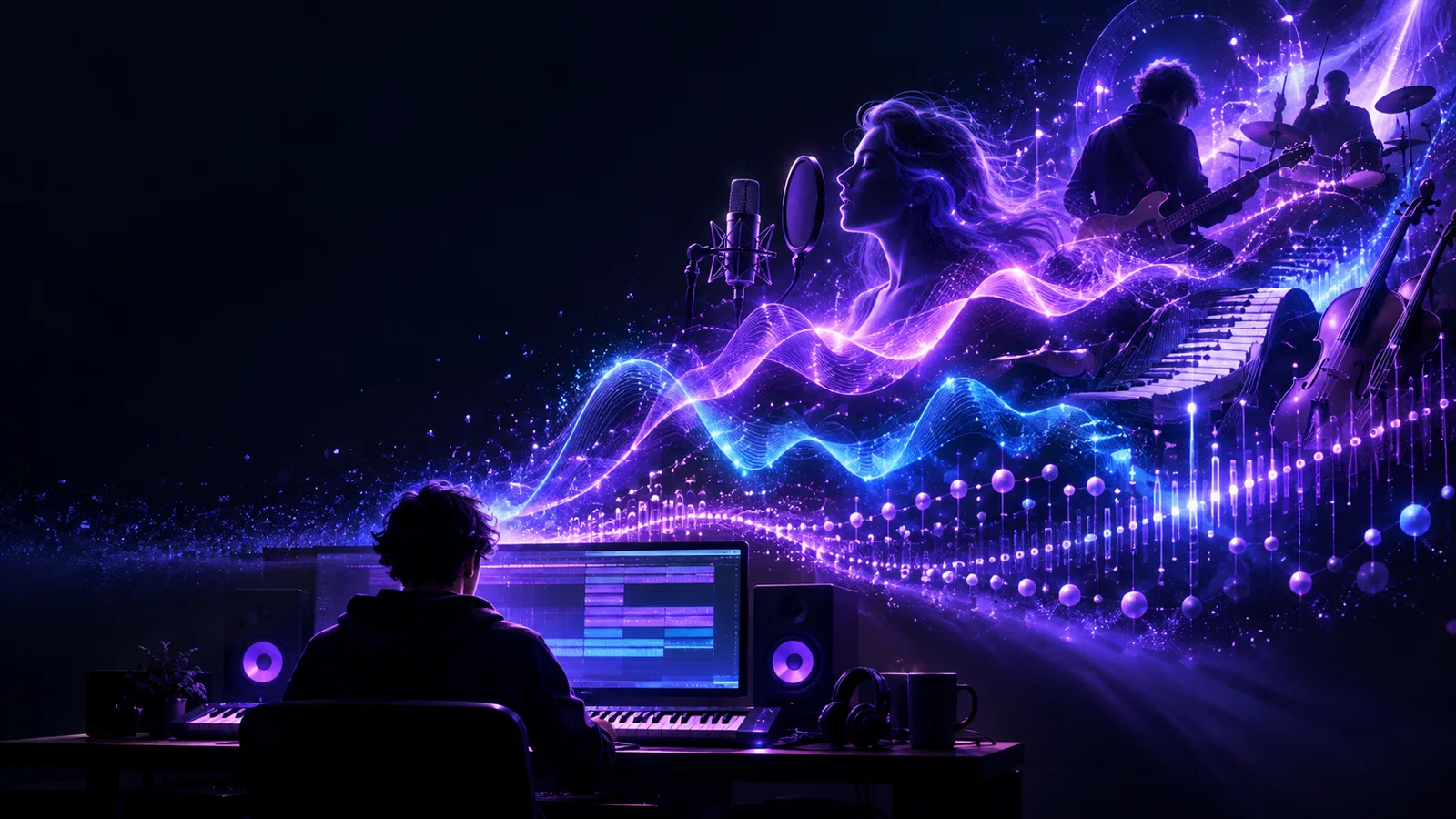
Music producer working on a creative direction Artist-led collaboration
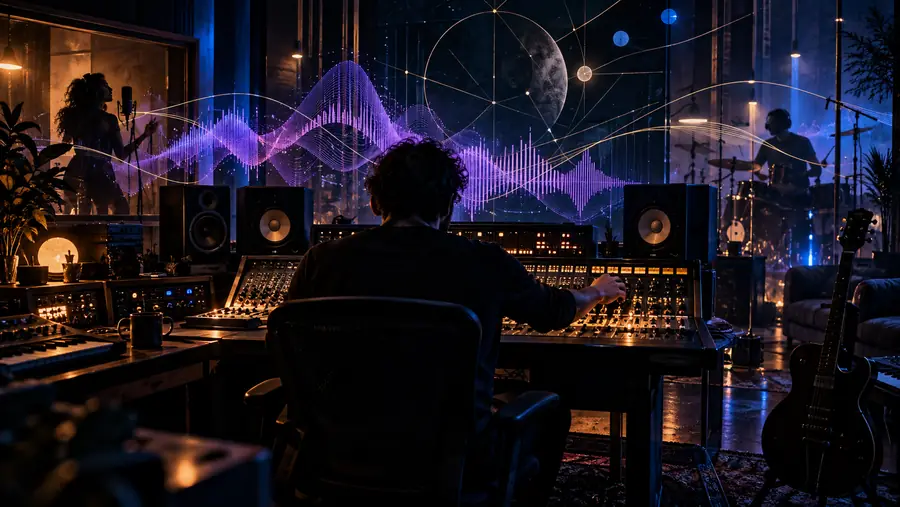
Illustration accompanying a comparison of generated songs and artists Generated-music exploration
These images illustrate two workflows, not the sound or quality of either result. An artist-led route suits a film, campaign, or recurring series when the performance should carry a particular identity and you can discuss revisions. Generated music suits early exploration when you need to hear how different directions might sit beside your edit. A useful draft can also become a reference for an artist; choosing one route today does not rule out the other later.

Migration path

Moving between approaches works best when you keep the creative brief and the rights check separate.

Video creator testing a concept

Describe the scene’s pace, emotional turn, and moments that need space. Use a draft to judge the direction against your cut, then write down what worked before briefing a musician or choosing another source.

You carry a clearer musical reference into the next stage without assuming the draft is ready to publish. If the destination is a short-form platform, its editing and music rules are a separate decision.

ai songs vs tiktok

Producer replacing a placeholder

Identify what the placeholder actually contributes: tempo, energy, instrumentation, or a transition. Ask an artist to respond to those qualities rather than copy a recording, and agree on the scope of the new work.

The replacement can serve the same scene while developing its own identity. If your real choice is between a new composition and existing tracks, compare that decision separately.

ai songs vs playlist

Team moving from a demo to release

Keep the brief, approved references, and intended uses together. Before the final edit, confirm who created each recording or output and what permissions cover the version you intend to distribute.

The team can distinguish a helpful demo from a cleared soundtrack. Understanding the origin of each piece also makes conversations with collaborators more precise.

what is considered an ai song

Give your next video a clearer creative direction

Start with the scene, audience, and mood you want to convey. Aisongs can point you toward a video-focused creative workflow; assess the available tools and their terms before relying on any music in a finished project. If an artist is the right fit, use what you learned from exploring the direction to write a stronger brief.

Explore video creation
  • Match the musical idea to the edit
  • Keep a record of the direction you chose
  • Verify permissions before publication

Comparison FAQ

There is no universal winner. A generated draft may help you explore options, while an artist can respond to feedback and shape a distinctive performance. Judge each candidate against your scene, audience, and intended use.

It may cover a particular need, such as trying a musical direction, but that is not the same as replacing a collaborative relationship. If your video depends on a specific interpretation or repeated revisions, consider working with a musician. Check usage terms whichever route you choose.

The difference is how the work is made and directed, not a reliable shortcut for judging how it sounds. With an artist, you can discuss intent and performance directly with the person making the music. With generated music, you evaluate outputs produced through a tool and the terms governing their use.

Yes, a draft can help communicate mood, pacing, or instrumentation. Explain which qualities matter instead of asking the artist to reproduce a recording. Check whether the draft’s terms permit the way you plan to share or use it.

Choose the music that serves the edit and comes with permissions appropriate to your intended distribution. A human commission needs a clear agreement about the composition and recording; generated music requires a review of the tool’s terms and any relevant third-party material. Neither label alone establishes that a track is cleared.

Start creating
Start creating